A simple guide for thin hair, invisible volume, and warm Middle Eastern weather.
If you have been searching for semi-permanent hair extensions, you may have seen two similar terms: sticker hair extensions and tape-in hair extensions.
At first, they may sound like two different methods. One sounds more casual, while the other sounds more professional. But in most cases, they refer to the same type of extension.
So why do both names exist? And if you have thin or fine hair, how do you know whether this method is right for you?
Let’s break it down clearly.
What Are Tape-In Hair Extensions?

Tape-in hair extensions are a professional semi-permanent hair extension method.
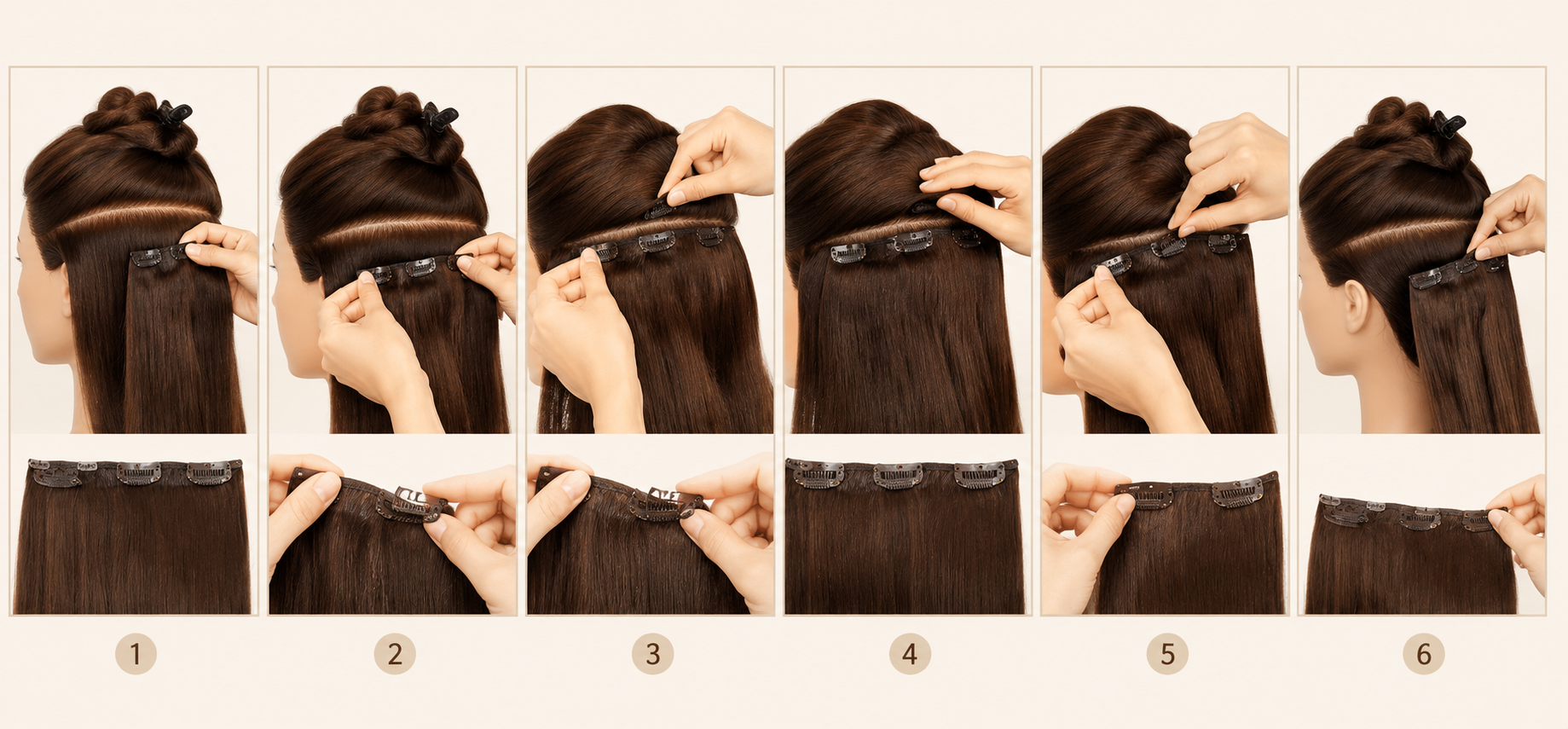
Each piece comes as a thin hair weft with a pre-attached adhesive strip at the top. During installation, a small section of your natural hair is placed between two tape wefts, creating a flat “sandwich” effect.
When installed correctly, tape-ins sit close to the scalp and blend naturally with your own hair. They are designed to look flat, lightweight, and discreet.
This is why tape-ins are popular for women who want natural-looking length or volume without removing their extensions every night.
What Are Sticker Hair Extensions?
Sticker hair extensions are usually another name for tape-in hair extensions.
The word “sticker” comes from the adhesive strip used on each tape weft. In casual beauty searches, especially in the Gulf region and Middle Eastern market, many shoppers use the term “sticker hair extensions” because the application looks like a soft adhesive sticker being placed near the roots.
You may also see this method described in Arabic as:
وصلات شعر لاصقة
So, in most product searches, sticker hair extensions = tape-in hair extensions.
The main difference is not the product itself. The difference is the wording:
Tape-in extensions is the professional salon term.
Sticker hair extensions is the more casual search term used by some customers.
Are Sticker Extensions and Tape-Ins Always the Same?
Usually, yes — but you should still check the product details before buying.
A true tape-in or sticker hair extension should have:
- Thin pre-taped wefts
- A flat adhesive strip at the top
- Hair that can be installed close to the scalp
- A semi-permanent wear time
- Professional removal and reinstallation options

Be careful if a product called “sticker hair extensions” looks like a one-piece adhesive patch, temporary hair sticker, or very cheap synthetic strip. Those may not be the same as salon-quality tape-ins.
For the best result, look for 100% Remy human hair tape-ins with a thin, flexible tape base.
Are Tape-In / Sticker Extensions Safe for Thin Hair?
For thin or fine hair, the biggest concern is tension.
The good news is that high-quality tape-in extensions can be one of the gentler semi-permanent options when they are installed and removed professionally.
Here’s why they can work well for fine hair:
The weight is spread more evenly.
Tape-ins distribute weight across a wider section of hair, instead of pulling on tiny individual strands.
No heat is needed.
Unlike keratin bonds, tape-ins do not require hot bonding tools during installation.
The base is flat and discreet.
The thin tape base can lie close to the scalp, which makes it easier to hide in fine hair.
That is why tape-ins are often chosen as invisible hair extensions for thin hair.
However, they may not be suitable if your hair is extremely fragile, actively shedding, or if your scalp is sensitive. In that case, it is better to speak with a professional stylist first.
How Do They Compare with Clip-Ins?
Clip-ins are temporary. You wear them during the day and remove them at night. They are good for events, photoshoots, or occasional styling.
Tape-ins, or sticker hair extensions, are semi-permanent. They stay in your hair for several weeks and are better for everyday volume and length.
If you want flexibility, clip-ins may be easier.
If you want a more seamless daily look, tape-ins may be more suitable.
Can They Work in Middle Eastern Weather?
Yes, tape-in or sticker hair extensions can work in warm climates, but aftercare is important.
In places like Dubai, Riyadh, Doha, Kuwait City, Manama, and Muscat, heat, humidity, sweat, and styling products can affect how long the tape lasts.
To help the adhesive stay secure, your hair should be clean, dry, and free from oils before installation. After installation, avoid applying oils, heavy conditioners, or masks directly on the tape area.
With good-quality tape and proper care, tape-ins can be a practical option for warm weather.
3 Care Tips for Better Wear
First, keep oils away from the tape area. Oils and rich conditioners can loosen the adhesive.
Second, brush gently. Use a loop brush or wide-tooth comb, and always detangle from the ends upward while holding the hair near the roots.
Third, follow the move-up schedule. Most tape-ins need to be moved up every 6–8 weeks as your natural hair grows. Leaving them too long can cause tangling or uneven tension.
Final Answer: Which One Should You Choose?
If you are comparing sticker hair extensions vs tape-ins, the answer is simple: in most cases, they are the same method.
The professional name is tape-in hair extensions.
The customer-friendly search name is often sticker hair extensions.
For thin hair, this method can be a good choice because it is flat, lightweight, and discreet. But the final result depends on hair quality, professional installation, and proper aftercare.
If you want natural-looking volume that feels seamless for daily life, tape-in or sticker hair extensions may be the right option for you.
[Shop Sticker & Tape-In Hair Extensions]
Not sure how many packs you need? Tap the WhatsApp icon on our website and our hair experts will help you choose the right length, shade, and volume for your hair type.